SmartLabel Solutions
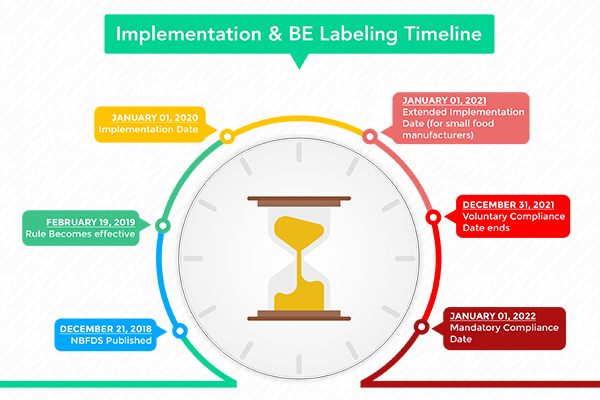
Here is an infographic showing “Implementation and National Bioengineered Food Disclosure Standard Timeline and Items Checklist”
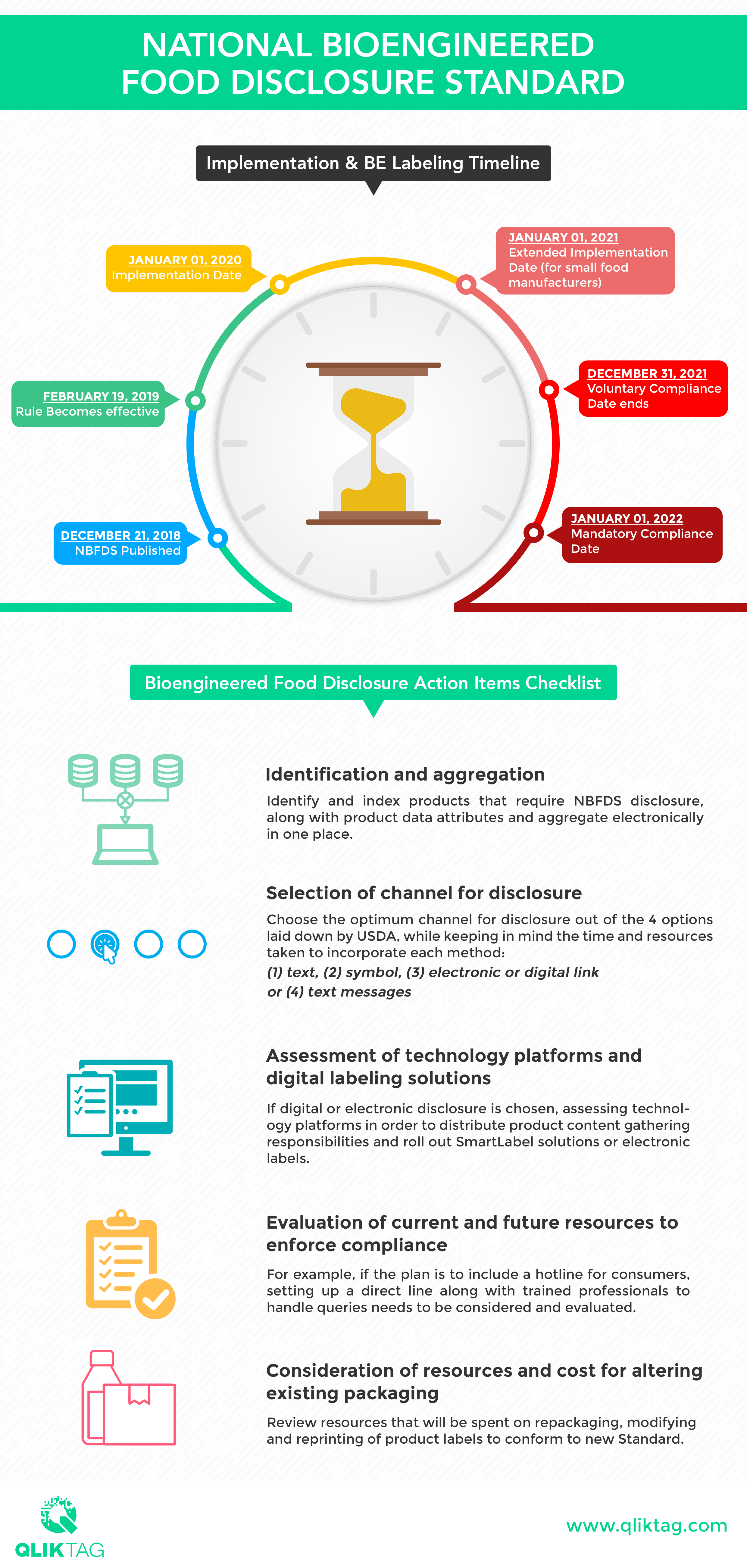
With concerns rising amongst citizens, the USDA issued the National Bioengineered Food Disclosure Standard (NBFDS) last month. This regulation is designed for manufacturers, importers, retailers, and other entities in the retail space. Its primary aim is to ensure that bioengineered food and ingredients are properly disclosed on product labels. This move is intended to enhance transparency and provide consumers with standardized formats to disclose information pertaining to bioengineered food products, thereby fostering greater trust in food labeling.
Previously referred to as Genetically Modified Organisms (GMOs), the new Standard has established the term “Bioengineered” (BE) for genetically modified food products. The USDA defines bioengineered foods and ingredients as those containing genetic material modified through in vitro recombinant deoxyribonucleic acid (DNA) techniques. This modification cannot be obtained through traditional breeding methods or found in nature. Notably, the Standard exempts highly refined foods and ingredients, such as syrup, sugar, and vegetable oils, from disclosure, as these do not contain detectable genetically modified material. This clarification is essential for manufacturers to understand the scope and limitations of the regulation.
What does this mean for food brands & manufacturers in terms of compliance with the regulation?
The USDA has laid down four channels that concerned entities can use for BE disclosure:
(1) text, (2) symbol, (3) electronic or digital link or (4) text messages.
Out of these, electronic labels or digital links appear to be the quickest, possibly the least disruptive method of quick compliance with the new regulation. Electronic BE foods disclosure can have some upsides; It is a sustainable, efficient and cost-effective method to dispense valuable product data to consumers while leveraging the smartphone technology and its ubiquitousness. It also supports changes to label content instantly without reprinting or having to change the entire packaging every time there is an update that needs to be shared with consumers, a useful feature to accommodate future changes in labeling standards.
Electronic or digital disclosure can be achieved through a digital link or a scannable QR code placed on the product packaging, which on being scanned will take the user to the appropriate landing page containing the product data.
NBFDS stipulates that the BE symbol be placed in an immediately visible spot on this page, potentially looking something like this:
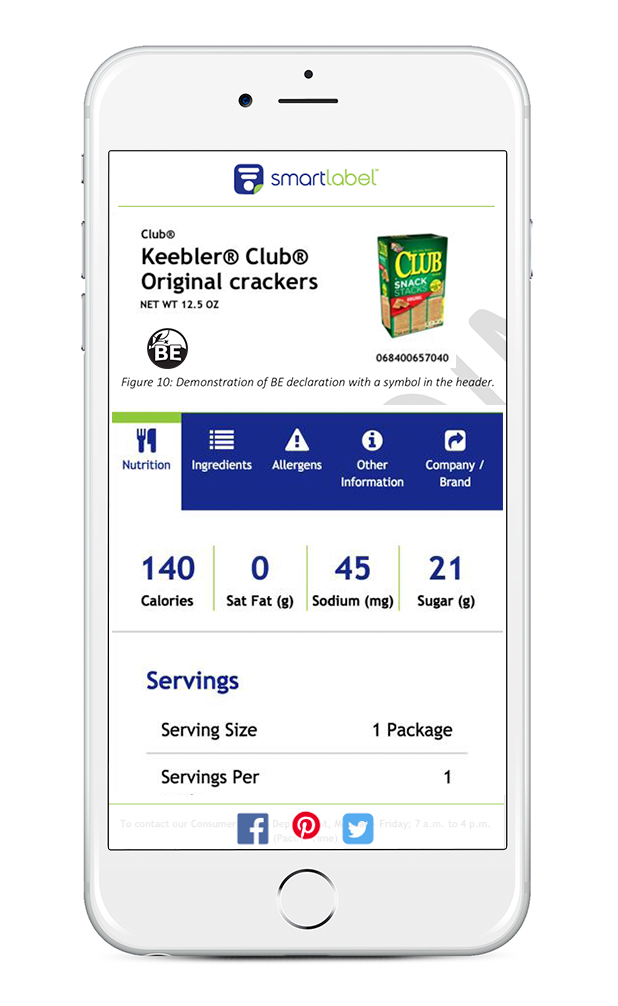
The SmartLabel program presents excellent scope to comply with these regulations. The SmartLabel initiative spearheaded by the GMA is already bringing in QR code-based digital labeling practices, having added over 25,000 products under its helm. Not only does it provide expanded product information, but it also ensures content is delivered in a standardized format which is easy to break down and absorb by consumers.
The clock is ticking as concerned entities have till January 1, 2020 and January 1, 2021 for small food manufacturers, to comply with and implement the new Standard, with the mandatory compliance date set at January 1, 2022. The urgency to begin exploring smartlabel solutions for BE regulations compliance before the NBFDS takes full effect has begun and the time to act and implement a viable strategy is running out.
This shift towards transparency and compliance through smartlabel solutions is not merely about adhering to regulations; it’s about fostering a culture of openness and dialogue with consumers. Engaging with them on their concerns about bioengineered foods can lead to a more informed public, ultimately supporting healthier choices and lifestyles.
In conclusion, the implementation of the NBFDS and the adoption of smartlabel solutions represent an opportunity for the food industry to enhance transparency and build consumer relationships. By embracing these changes, food brands can position themselves as leaders in transparency and trust, ultimately benefiting both consumers and the industry as a whole.
As the food industry continues to evolve, staying ahead of regulations will require ongoing education and adaptation. Companies should monitor changes at the legislative level that might affect food labeling and consumer rights. Furthermore, feedback from consumers regarding labeling can provide insights that shape future product development and marketing strategies.
Additionally, the use of technology, such as mobile apps that provide further information when scanning QR codes on packaging, can improve consumer engagement. Companies that utilize such technological innovations can create a more interactive experience for consumers, thereby enhancing brand loyalty. This is particularly relevant as younger consumers, who are more tech-savvy, might prefer robust digital interactions regarding food information.
To illustrate the importance of compliance, consider the ramifications of failing to adhere to the NBFDS. Companies that do not meet the labeling requirements risk facing penalties, which can include fines or product recalls. Moreover, non-compliance can damage a brand’s reputation and erode consumer trust. On the other hand, those that engage with the SmartLabel program can transform compliance into a competitive advantage, showcasing their commitment to transparency and consumer education.
The landscape of food labeling is shifting, and transparency is more critical than ever. Consumers are increasingly seeking detailed information about their food sources, and bioengineering is a significant topic. As such, companies must leverage this regulation not just to comply, but to build consumer trust through informative labeling practices. By adopting proactive communication strategies, companies can enhance their brand reputation while adhering to the new legal framework.
With the implementation timeline set, it is critical for food brands and manufacturers to begin strategic planning to adhere to the NBFDS. Engaging with industry experts and legal advisors can help navigate compliance effectively. Additionally, brands may consider joining industry associations that provide resources and support for regulatory compliance. Workshops and webinars can also be beneficial for understanding the nuances of the regulations, as well as best practices for labeling and consumer communications.